




























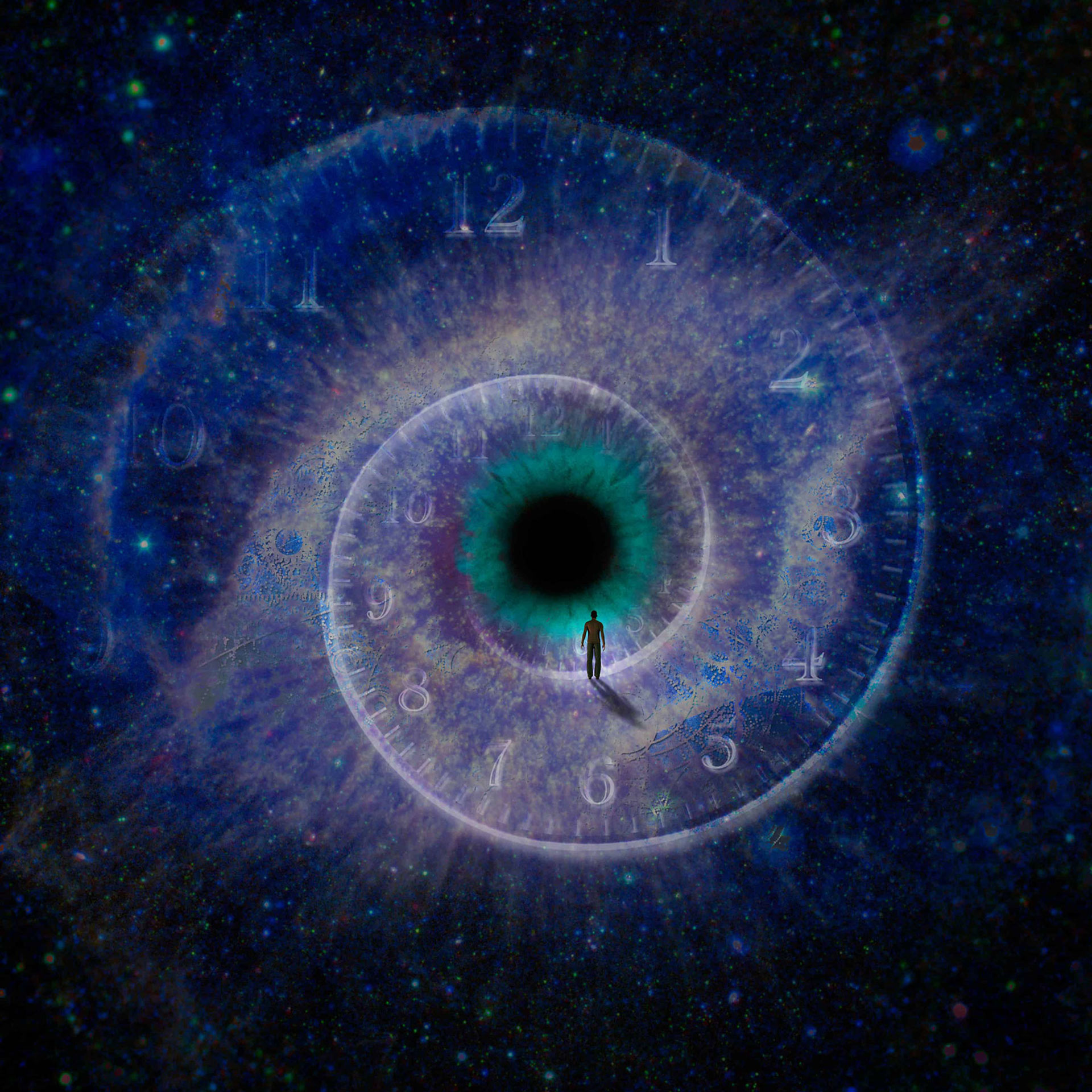
“超越理智的真理,无法通过理智看见。不作为的境界,无法通过刻意作为达到。如果你想达到超越思维的不作为境界,就斩断心念的根源,安住于赤裸的觉知!”
~ 帝洛巴,大手印教授

Meditation and self inquiry are actually two aspects of one path to Samadhi. In quantum physics light is seen as both wave and particle, depending on whether the observer is present. Similarly reality becomes more wave-like when the observer starts to merge into the observed in meditation. One experiences oneself as a free flow of sensation or inner energy as the observer merges with the observed. Or more precisely, there is actually no merging that happens but rather the illusion of separation falls away, or a higher (timeless) perspective is realized. This falling away can happen in progressive stages of meditative absorption, or awakening can happen in an instant. In Zen they say that at first a mountain appears to be a mountain. Then as one goes deeper it becomes clear that a mountain is no longer a mountain. Then upon realizing the final truth, a mountain is once again a mountain. When we observe gross physical reality single-pointedly without reaction, the wavelike ocean of prana is revealed. If we continue our inquiry, 两者 固态物质和波状能量被认识到与意识本身完全相同。这座山又变回了山,与你开始时一模一样。然而,在最后的觉知中,山不再是独立于意识的东西;你就是 那.
如果一个冥想者在粗糙物质现实和生命能量或微妙意识状态之间来回切换,这仍然是二元性中的一场游戏。在这场游戏中,人们可能会学会如何放下粗糙的物理现实,体验到摆脱了在固有模式中运行的微妙内在能量。另一方面,微妙的能量状态又可能再次转变为粗糙的现实。人们可以体验到其中一种,但不能同时体验到两种。在量子物理学的双缝实验中,我们无法同时观察到光子作为波和粒子。要做到这一点,观察者必须同时存在和不存在,这在受时间限制的线性视角来看是没有意义的。然而,这正是三摩地中发生的事情;僵化的、受时间限制的观察者消失了,或者放下了它对其中一种状态的永恒追求,而人们醒来成为永恒的、无处不在又无处不在的觉知。看者、观看和被观看被认识为一体。光子粒子、波和观察者被认识为一体。.
“如同乌云背后的太阳,人的本性永远闪耀,但被心智的乌云所遮蔽。”
无论我们称我们的练习为打坐还是自我探究,我们都始于一种二元分离的状态,并感知到一个颗粒状的世界。 东西 由有限的心智所产生。我们观察到一个由离散部分组成的身体,感官、感受、思想和现象在其上产生,而我们对生活和自我的体验则通过这个削减阀过滤。如果我们坚持使用我们正在使用的任何禅修对象(无论是呼吸、感觉,还是意识本身),不对任何出现的感受或现象做出反应,那么禅那或禅定吸收的过程就会继续,直到一个人停止禅修,或者观察者和被观察者被认识为一体。心,总是变化不定、总是显现、总是运动,与纯粹的...融合或显现为纯粹的... 意识, 且不曾移动或改变。寂静的维度并非在别处,而是内在于心,并与心同在。.
任何正在使用的冥想技巧都属于有条件的头脑,或者属于自我的结构,最终必须消解为无为。 一直 开始任何修行(无论是有意识还是无意识的),首先要努力瓦解有限自我的幻象,否则我们早已证入三摩地,也就无需修行了。我们通过让一切如其所是,不以任何方式操纵现实,或对幻象做出反应,来斩断幻象的根源。这既需要纪律来保持对当下状态的觉知并深入其中,也需要一种内在的臣服或无抵抗能力,随着修行在越来越深的层面展开。从永恒教义的角度来看,古老的止(samatha)和观(vipassana)修行,对于所有旨在剥离对自我结构的认同的禅修技巧来说,都是根本性的。止可以与观同时进行,就像鸟的两只翅膀一样,如果这两个禅修方面达到平衡,就能将人带入三摩地。.
当一个人能够长时间地冥想/探究而不产生反应,不认同所出现的现象,保持一种平静安详的临在状态时,便能获得更深的禅定境界。他会感知到越来越精微的感觉现象、越来越精微的能量,直到感官变得清晰通透,与普拉那(生命能量)自由流动,心灵摆脱了无意识的习气模式(即偏好某种感觉而非另一种),心智得以净化。这样,有限的“自我”的幻象就会失去其力量,心灵的乌云就会消散,显露出本初的、一直都在的觉知。.
“一日冥想,探求真谛。 nature of things brings greater spiritual benefits than hearing and examining the Dharma for many aeons.”
摩诃僧祇方说
没有自我探究的部分,一个人可以通过数十年练习一种有条件的技巧来进行冥想,也永远无法认识到自己真正的本性。如果一个人执着于一种冥想技巧,那么这个技巧本身就会成为已知事物的束缚。另一方面,如果我们只做自我探究来揭示自己的本性,那么被条件化的自我结构可能无法深刻地净化,因为如果不长时间冥想,很难/不太可能触及最深的桑斯卡拉。通过自我探究,人可能会暂时获得觉醒的体验,但如果人的载体没有从根本上净化,那么旧的有条件模式就会卷土重来。就像杂草只被割掉了顶部,你的妄念又会重新生长。当自我探究或冥想被深入实践,触及到贪婪和厌恶的根源时,两者就会相互包含。当冥想和自我探究变得不可分割地合一时,这才是通往三昧和解脱性认识的修行。.
Some meditation systems (Buddhist, Yogic, Taoist) emphasize techniques such as observing the breath, and bringing awareness to bodily sensations, inner energy or thoughts. Others such as the nondual or self inquiry traditions (such as Vedanta, Dzogchen, Zen and Mahamudra) emphasize letting go of all conditioned techniques and resting as awareness itself. So which doorway to use?
两个门都通向同一个三摩地。.
二元性中的巨大幻象在于,实际上存在两个入口,而事实是,禅修和自我探究是同一个连续体的两端。这个连续体是人类随时间推移的体验,从具体物质层面的意识,到能量和心灵的微妙层面,再到因果意识。大多数人要么没有足够深入或足够长地进行禅修或自我探究,以至于认识到它们是一体的(实现三摩地)。如果你练习足够长的时间,就会发生一种冥想吸收的过程,或者“禅那”,即禅修者与禅修对象融合。禅那(jhana)这个词与梵语的“dhyana”是同一个词,它是帕坦伽利的瑜伽八支中的第七支。它与这些传统中的“Zen”和“Chan”是同一个词,这些传统也因此得名。佛陀描述了他证悟的那个夜晚:
“我生起了不懈的精进,安住了不退的念,我的身体寂静而不扰动,心意集中而统一。远离了欲乐,远离了不善法,我进入并安住于初禅……二禅……三禅……以及四禅。” ~《沙门果经》
当禅那的炼金术发生时,随着你迷失在禅修对象中,从粗糙现实的体验转变为对生命能量场(pranic field)和玛雅(maya)或自我的微妙层次的体验,直至领悟与其它层次不可分割的意识的因果空性,技法将随之消散。如果你能够对任何展开的状态保持不反应,那么你将处于生命能量场或佛性(Buddha-mind)自我觉醒以及伟大实相显露的最佳状态。同样,如果你足够深入地探究自我,隐藏的习气(sankaras/samskaras,无意识的条件反射模式)将开始从深层浮现,而自我结构有机会通过与浮现之物保持平等心来净化它们。 是 没有阻力。.
If you are looking for guidance in this process, the Samadhi meditation series (available for free) starts with techniques and then gradually moves toward less and less doing, until one reaches the still point where there is simply presence of the immanent Self or selfless-self. “Still point” is not the right description, but rather it is more of a dynamic stillness or pregnant emptiness; a non-dual plenum that transcends opposites. One comes to a place of pure choiceless awareness, the ground of one’s being, or natural state unmediated by a limited self. Even while one is practicing a technique, one can be aware of WHO or WHAT is practicing. For example if you are abiding with the breath it is possible to be simultaneously aware of awareness. The mind’s limited attention or first attention can be on the wide or narrow breath, and like the focal lens of a camera it can be narrow or wide, and one can point it or change the location within the sensory field that it is focused on. There is simultaneously an awareness that is simply aware of its own being, inseparable from these changeable qualities of limited attention; an awareness that does not change or have any quality whatsoever. This absolute awareness is not a mental activity, not a separating or discriminating of phenomena into “things”, but could be described as the space in which mental activity arises. Yet the word space is not right because there is no location; it is a space/emptiness/stillness or center that is everywhere and nowhere. Absolute awareness is what is simply aware without any object, while the mind’s attention is always aware 某事物. 你可以用心关注呼吸,同时觉察 谁或什么 是观呼吸。观者、所观和被观被认识为一体。.
View the Samadhi Meditation Series
同时练习禅修和自我探问,直到你意识到它们是一体的。.
Throughout this writing I will be using the terms awakening and enlightenment in a specific way. One of my favorite Zen phrases is “not one, not two”. Awakening and enlightenment can be seen as “not one, not two”.
什么是觉醒?
觉醒是认识超越名称和形式的真实本质。觉醒是从有限自我的梦中醒来。对于未亲自体验过的人来说,这些只是词语,思维无法理解。原初的觉知意识到自身就是万物,或者可以说,心智/自我的所有层面都被认识到是空性的觉知。觉醒有许多层次(禅那),但当意识与心智的纠缠或认同完全停止时,真实的本质就会显现。历代以来,它曾被称为解脱、涅槃、无分别三摩地、拂那、见性、静默以及许多其他名称。在吠檀多中,所证悟的被称为“大写的”自’”(Self)或 真我, 在佛教中被称为“无我”(anatta)或“空性”(shunyata)。在印度教中,所证悟的是“梵”(Parabrahman)或“至高之我”(Paramatman),而在神秘基督教中,则是“神性”(godhead),它除了合一/存在之外没有其他特质;这是神格的非人格化存在,与三位一体的某个方面相对。.
尽管不同传统之间的语言可能存在差异,但反映永恒教义的传统都指向觉醒体验的根本实相,这是证悟者的共同体验。尽管这样说也不完全准确;它并非真正是一种体验,因为它是一种体验者与被体验者二元性的瓦解。我们试图传达它时,语言总是不够准确。.
大多数体验到觉醒状态的人都会失去它,重新沉睡,并成为心念和自我认同波动的牺牲品。著名的禅诗《信心铭》中说:“只遇绝待,未是究竟”。从绝对的角度来看,觉醒于你的真实本性就是灵性道路的开始和结束,或者说是一种体认,即那个目的地从一开始就一直存在。从绝对的角度看,你会认识到那永不生灭的、仅仅是 是.
正如耶稣所说:“还没有亚伯拉罕,就有了我。” 起初,当你试图将意识转向“我是”或“自我”的感知时,你看到的是那个虚假的自。但是,如果你不为升起的许多层面的幻象所动摇,并且坚持不懈地、真诚地探究,那么有限的自我将会让位,并实现三摩地。正是在这个融合的状态中,般若/智慧的黎明才有可能。即使是尝到一点点,也可能改变你的生活,因为你会知道自己不仅仅是这个有限的、短暂的自我结构。.
觉醒是启蒙过程的潜在开端,这是一个加速的内在发展时期,能够净化人的身心,使人能够保持在觉醒状态,从而使三摩地不再时有时无。事实是,大多数人会重新睡去,因为他们不愿意或无法放弃小我的惯性活动和偏好。有限的自我只对 概念 of awakening, but it can not awaken. It will manufacture a facsimile, a spiritualized persona or ego construct around any awakening experience. The awakened state leaves no traces, no sankaras or conditioning and is not something that can be remembered. Any memory of one’s awakening is just a mentalized construct and must be let go of; one must always start with a beginner’s mind if one is to realize it again and again. Any knowledge of what the awakened state is, is a false screen or filter over awareness. As Socrates said, “I only know that I don’t know.” Awakening means the limited mind becomes a servant, and it will no longer be the master of one’s life. It is no longer “my will”, or “my knowing” but higher will or the heart’s will; one surrenders to the flow of the unfathomable Tao, the wisdom of the great reality.
我的一个老师(尼古拉斯)总是问:“你愿意付出多少?”我们只有一种可以支付的货币:我们自己。但大多数人都不愿意付出,因为价格太高,而且环境太强硬。人们不愿意为了超越这两者而承受痛苦或放弃快乐。必须允许好与坏共存,这样它们的神化结合才能转化为新的东西。你所是的那个人,便成了那个死土,而这个新的现实便诞生了。在这个过程中,对有限的自我最好的利用方式,是意识到自身的局限性,并学会如何放弃二元思维、偏见、操控、对与错的歧视;本质上说,就是学会如何去死亡。.
什么是开悟?
斯里·尼萨迦达塔·马哈拉杰说:“一个人必须先了解(有限的)自我,才能超越(有限的)自我。”一个人必须认识到习得的、有限的自我意识是什么,以及它源自何处,才能摆脱与之认同。当我们谈论任何“体系”或通过阶段来认识自我的渐进式旅程时,我们总是在谈论相对的事物。我们谈论的是觉醒过程,即探索、发展心智和自我结构,并使人格对原始意识透明。由于心智是一个不断成长、有生命力的结构,这是一个需要随着时间逐渐发生的过程。.
没有任何技巧或系统能够强迫或带来般若(prajna)或解脱的洞见,但它们能使人投入到内心净化的过程中,从而更有可能发生。禅宗有句俗语说,觉醒似乎是偶然发生的,但修行使人更容易“偶然”遇到。一些基督教神秘主义者曾说过,上帝与我们相遇一半,或者上帝帮助那些自助的人。我们必须尽自己的一份力量去揭示和放弃小我,通过恩典,神圣会向我们伸出援手。这种恩典是我们是谁以及我们是什么的真相的显现。.
Enlightenment has two aspects: purification, which is becoming free from existing conditioning, and inner development, which is the growing or expanding of the self structure into higher levels of mind. Enlightenment is BOTH the expanding into the higher levels of self, and the purification or detaching from all levels of the self structure/soul. This is a process that happens through time, which results in a human vessel that will be increasingly fit to support or house primordial consciousness, or to let the sun shine through unobstructed by clouds.
启蒙是允许觉醒状态的发展过程
成为一个不来不去的永恒舞台。.
启蒙既是摆脱桑斯卡拉,即摆脱束缚意识于幻象的习性模式,也是扩展进入新的、更精微的自我维度。超越存在的精神和物质层面,还有能量或生命能量的层面、更高的心智/精神领域、以及不二的喜乐领域。.
Primordial awareness, which is our true nature, of course needs no enlightening; it is perfect as it is. The enlightenment process is only for the limited self. Upon realizing Samadhi one sees the absurdity of seeking awakening, since the awakening is identical to the dropping of all seeking and the seeker! Or more precisely the seeker, the seeking and what is sought are realized as one with all that is. One wakes up but continues to become enlightened, continues to develop the self and to grow, expanding the tree of life to become a continuous bridge between the world of form and the formless, while at the same time realizing the illusory nature of the limited self structure. Those who have realized the ultimate truth may laugh at the absurdity of the human condition, and the seeking and striving that is both futile and necessary if we are to awaken. One laughs at one’s efforts to find something that was never lost, and to seek something that is only obscured by seeking itself.